Showing posts with label Russian Infantry. Show all posts

Monday, December 31, 2018

A List of the Figures that I Painted in 2018


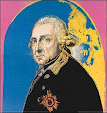
Vignette of Frederick the Great grabbing the flag of the von Bulow regiment at Zorndorf


Here is a list of all of the wargame units that I painted in 2018, all of which are Seven Years War figures. Click on the links to go to the blog post that covers each unit that I painted.

Los Rios (Austrian) 2 x 32 figure battalions   November 15, 2018
Lacy (Austrian) 2 x 32 figure battalions    October 12, 2018
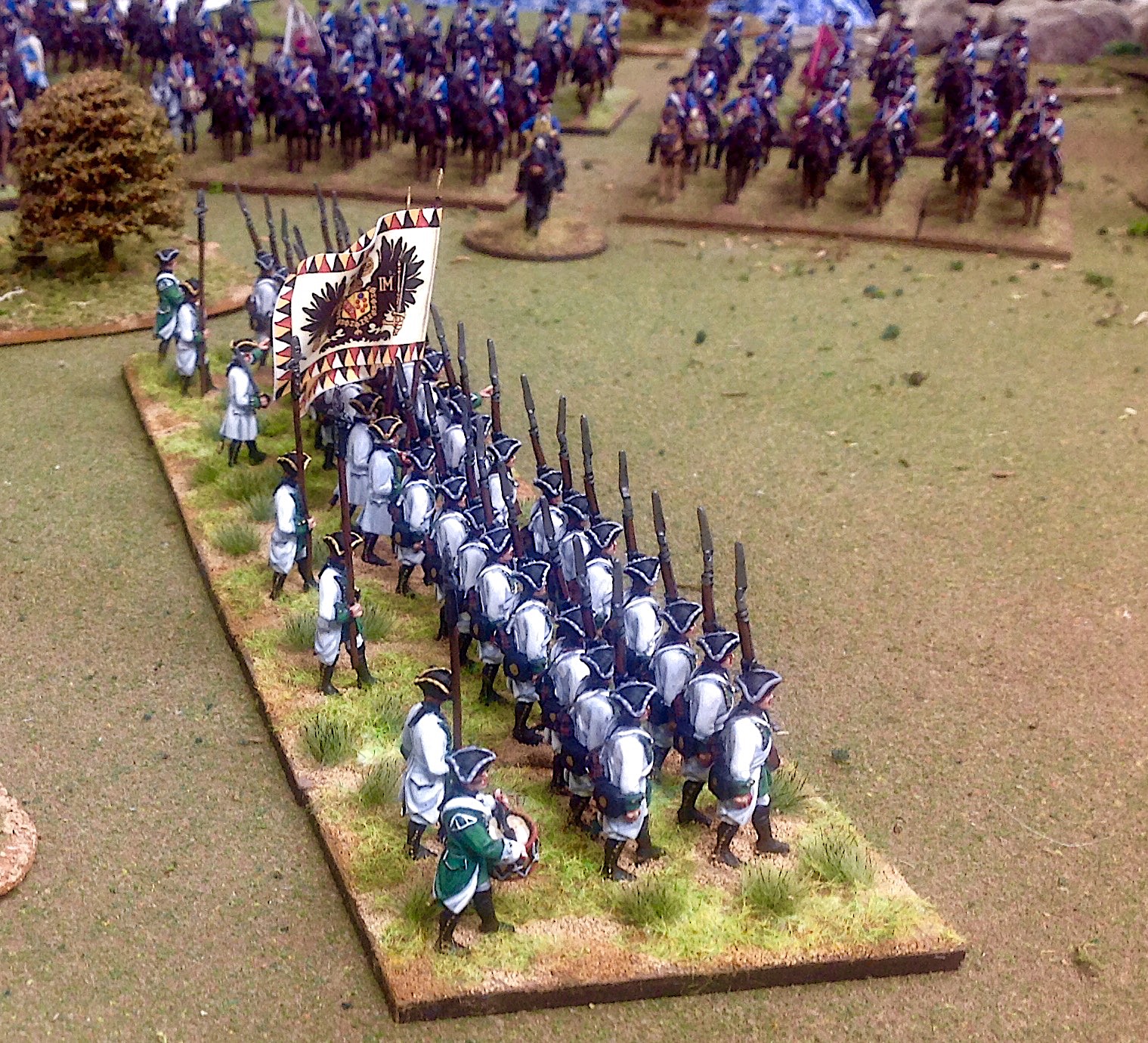
The Austrian Musketeer regiment Lacy, showing a new basing style that I am contemplating.


Russian 4th Grenadiers 1 x 32  September 29, 2018
Perm Musketeers (Russian) 1 x 32   September 23, 2018


2nd South Carolina Regiment (AWI)   July 25, 2018

2nd South Carolina Regiment (AWI)

IR2 von Kanitz Musketeer Regt. (Prussian) 2 x 32 figure battalions   July 18, 2018
Manstein Grenadier Battalion (Prussian) 1 x 32 figure battalion  June 30, 2018

Manstein Grenadier Battalion

Von Kanitz Musketeers

Observation Corps Grenadiers (Russian)   May 21, 2018

Observation Corps Grenadiers


IR46 von Bulow Fusilier Regt. (Prussian) 2 x 32 figure battalions May 12, 2018  and June 8, 2018 
IR35 Prinz Heinrich Fusiliers (Prussian) 2 x 32 figure battalions    May 4, 2018
Jung Sydow Garrison Battalion (Prussian) 1 x 32 figure battalion   April 30, 2018

Von Bulow Fusiliers


Observation Corps 5th Musketeers (Russian) 1 x 32 figure battalion  January 30, 2018
Permski Regiment (Russian) 1 x 32 figure battalion January 14, 2018 
Narva Regiment (Russian) 1 x 32 figure battalion  January 6, 2018

Russian Observation Corps Musketeers


I also painted 4 Russian artillery pieces, each with 4 crew plus limber teams of 4 horses, 1 rider and 1 limber. Here


Russian artillery battery with limber teams

If my math is correct, the total number of figures painted in 2018 was 652 figures. There are probably more than that if I include some vignettes that I made and some samples that I painted for the Fife & Drum on-line webstore and catalog.

Now in some of these instances, I posted the date when I flagged and based both battalions of a Prussian or Austrian battalion. So for example, the IR2 von Kanitz Musketeer Regiment indicates 2 x 32 battalions = 64 figures. I did not paint all 64 figures at one time, but rather, over the course of several weeks. My painting pace is approximately one unit of 32 figures per week, although I do not paint every week. I wish!


Sunday, September 23, 2018

Russian Musketeers in Coats - Newly Painted


The new Minden Russian Musketeers in regular coats plus GMB Designs flags.


CLICK PICTURES TO ENLARGE THE VIEW

The other day I completed the basing and flagging of a new regiment of Minden Russian musketeers wearing their regular green coats.

The product codes used to make this musketeer battalion of 32 figures include:

MR-001 Russian Musketeer Command (officer, drummer, std bearer and NCO)

MR-002 Russian Musketeers in regular coats (pack of 8 figures)

MR-003 Russian Musketeer Standard Bearer pack (2 figures)


Minden Russian Musketeers

For my own wargame army organization I use 32-figure battalions based on four stands, with 8 figures per stand. The two end stands have the drummer set out further from the rest of the battalion and there is an NCO on each flank base. My command stands consist of 2 standard bearers, one officer and 5 rank and file musketeers. In my Prussian battalions I replace one of the musketeers with a Zimmerman figure (wearing grenadier mitre and leather apron and carrying an axe).

So my units have two each of officers, standard bearers, drummers and NCOs for a total of 8 figures. There are also 24 rank and file musketeers (or grenadiers or fusiliers as required). Thus in the case of my Russians, the following packs of figures are needed:

2 packs of MR-001 Musketeer Command (4 figures per pack x 2 packs = 8 figures)

3 packs of MR-002 Musketeers


I really like the way that the Russian musketeers in coats turned out once I had painted them. I am sure that I will be painting more of them. Next in the painting queue: a battalion of Russian grenadiers in regular coats.

Wednesday, August 15, 2018

New Minden Russians Have Arrived


Minden Russian Observation Corps Grenadiers in Summer waistcoats.
Click picture to enlarge.

Griffin Moulds has sent my casting order for the 16 new SYW Russian line infantry that have been sculpted by Richard Ansell. They are scheduled to arrive at schloss Seewald on Friday August 16th.

The Russian Observation Corps musketeers and grenadiers, and Russian artillery crews and cannon are also available and are currently in stock. So I feel that Minden Miniatures has the Russian infantry and artillery well covered with selections.

The new product codes will be posted on the Fife & Drum Miniatures web store by August 20th of next week. The Observation Corps and Artillery crew figures are already in the web store.

You can order your Russians through the Fife & Drum web store: Fife & Drum web store

Introductory Discounts
We are offering the new Russian figures at an introductory discounted price that knocks off $2.00 from the 8 packs, and $1.00 from the new 4 pack command sets. Artillery crew and mounted officer prices are not discounted. This works out to a discount of approximately 17%!

Discounted prices:  Packs of 8 figures are priced at $16.00 and 4 figure command and artillery packs are $8.00;

Non-discounted prices: mounted officers are $6.00

Russian Line Musketeers
MR-001  Russian Musketeer Command (4 figures)
MR-002  Russian Musketeers in regulation dress (8 figures)
MR-003  Russian Musketeer Standard Bearer Pack (2 figures)
MR-004  Russian Musketeer Command, Summer dress (4 figures)
MR-005  Russian Musketeers, Summer Waistcoats (8 figures)

MR-006  Russian Mounted Colonel with horse

Russian Line Grenadiers
MR-007  Russian Grenadier Command, regulation dress (4 figures)
MR-008  Russian Grenadiers, regulation dress (8 figures)
MR-009  Russian Grenadier Command, Summer waistcoats (4 figures)
MR-010  Russian Grenadiers, Summer waistcoats (8 figures)

Russian Artillery Crews
MR-011  Russian artillery crew, loading (4 figures)
MR-012  Russian artillery crew, firing (4 figures)

Observation Corps (Summer waistcoats only)


Minden Russian Observation Corps Musketeers in Summer waistcoats.
Click on picture to enlarge.

MR-013  Russian Observation Corps Command, Summer waistcoats (4 figures)
MR-014  Russian Observation Corps Musketeers, Summer waistcoats (8 figures)
MR-015  Russian Observation Corps Grenadier Command, Summer waistcoats (4 figures)
MR-016  Russian Observation Corps Grenadiers, Summer waistcoats (8 figures)


Future additions to the Minden range will include French Cavalrie in Bearskin hats; French Grenadiers in Bearskin hats; Austrian Horse Grenadiers, a French Kettle Drummer, and Marshal de Broglie and Lt. General Chevert French personality figures.

After these figures are completed, then Richard will start working on AWI British Highlander troops and some AWI personalities.


Tuesday, May 29, 2018

Making Flags from Kronoskaf


Colonel's (left) and Regimental (right) colours of the
3rd Regiment of Observation Corps Musketeers, shown with
Minden standard bearers for the Observation Corps.

Click on all pix to enlarge

Yesterday I made my own flags for the 3rd Regiment of the Russian Observation Corps Musketeers using the flag images that are available on the Kronoskaf web site. If you are unfamiliar with Kronoskaf and you have an interest in the Seven Years War, then you owe it to yourself to click on the link below and visit the site.


The link takes you to the home page of the site. Click on the link called "Armies" and then select from the list of countries that are available for articles. In this case, click on "Russia" which will take you to the page of articles on the Russian army of the SYW. There is a list of combat arms such as cavalry, artillery and ordanance, infantry (with subcategories for musketeers, grenadiers, Observation Corps, light troops, etc.).

The Observation Corps flags can be found Here

Regimental flag of the 3rd Regiment Observation Corps Musketeers.
(Kronoskaf flag image)


I have had some success taking the basic flag image, creating a two-sided flag, and then embellishing the flag with hand-painting the emblems and designs on the flag. The end result is a hand-painted flag that looks very nice. I have posted the original Kronoskaf flags on this thread so that you can compare them to the ones that I hand-painted.

Reverse side of the Observation Corps colours.


The process is as follows:

  1. click on the flag image and download the image to your computer. I use an Apple system so my procedures apply to the Apple world, but I would imagine that Windows based systems use similar procedures.
  2. open up you Downloads file and select the desired flag image that you want to customize
  3. click on the image and using your cursor, outline the flag but cut off the flag pole and finial part of the image.
  4. click on the Tools drop down menu and select "crop".
  5. save the edited image under a new file name.
  6. Open up a new Word document and insert the new flag image in the document.
  7. click on the flag image - there will be a sort of arrow in each corner of the flag, use your cursor to click on one of these and use to resize the flag to a serviceable size. I find that 1.5" square or slightly larger is a good size for each side of the flag.
  8. once you have sized the flag, then click on the flag agains and select "Copy" from the Edit drop down menu.
  9. clikc your cursor next to the flag image in your Word document and select "Paste". You will now have both sides of the flag next to each other, creating a two-sided flag.
  10. Now you can print off your flag on a color printer
Once the flag is printed, then cut out the flag and double check to make sure that the size of the flag fits with your miniature standard bearer figure.
  1. glue the flag to the flag pole with white glue (I use the "Elmers" brand of school glue). I spread the glue across the paper using a tool called a "clay shaper" which you can buy at a craft store such as Michael's or Joanna Fabrics. It has a paint brush style handle with a synthetic rubber tip - use one of the tools that has a flat edge. Using this tool, you don't have the problem of glue drying on a paint brush after you are finished using it because the glue wipes right off with a piece of tissue or even your finger tipe.
  2. press the halves of the flag together and use a small paint brush handle or a pencil to shape furls into the flag. Note that flags tend to flap and furl on the downward diagonal axis away from the flag pole. Many gamers tend to use a furl that is parallel to the staff. Don't do this - it is unrealistic and does not look as good as a flag that is furled on the diagonal axis.

Now you are ready to paint the surface of nearly the entire flag image.

  1. start with the "field" of the flag and paint the surface with an acrylic paint color that is similar to the color on the printed image. In the case of my Observation Corps flags, I used a P3 brand green paint called "Knarls Green" as my basic shade color. Paint all green areas green, but leave a very slight amount of green near the flag emblems unpainted and let the original color show through. Later in the process I will add highlights to the colors on the flags.
  2. All of the cloud designs on the flag are painted over with a light grey paint (IWM brand "Light Grey" or a similar craft paint was used on my flag).
  3. The black double headed eagle is next. I take some basic black paint and mix in some white paint until I get a dark grey/light black color. I paint strokes of the dark grey on the feathers to add a dimension/depth to the eagle. Later, I will go back and mix up a slightly lighter version of the dark grey and paint some highlight strokes on the wings to really make them "pop" and get noticed.
  4. Red areas are painted with a Reaper brand "Blood Red" color and then highlighter with Reaper "Bright Red". If you want even more depth to the red, add a second highlight (your third variety of red) of "Fire Red" Reaper paint to the red bits.
  5. Now to the gold sunburst image that is behind the eagle. I paint the whole sunburst P3 "Rucksack Tan" as the base shade color. Next I paint strokes of P3 "Mouldy Ochre" color to highlight the basic rays of the sunburst. Finally, I mix some white paint into the Mouldy Ochre paint to create a highlight color and carefully add strokes of this color over the Rucksack Tan strokes. Be sure to leave some of the shade color on the edges of the highlight brush strokes. I wasn't entirely satisfied with the highlighting of the yellow bits, so I took some Reaper Master Series "Candlelight Yellow - 09408" and put dabs of this color on the tips of the sunburst rays.
  6. Next I outline the yellow bits on the edges of the central emblem of the flag. I think that it is St. George, but I'm not sure and it doesn't really matter. The lines are so tiny that I only used the P3 Mouldy Ochre paint color and did not bother with shades or highlights for the lines. There are some white bits on St. George so I dabbed some white paint on these but tried not to touch up the tiny St. George image too much because sometimes too much is "too much" in appearance.
  7. Now I work on the flames that are in each corner of the flag. These are red on the regimental flag. I paint the whole flame Reaper Blood Red and then add the Bright Red and Fire Red highlights to the flames.
  8. Time to paint highlights onto the green field of the flag, using Reaper "Leaf Green" color, paint brushstrokes of the colors on every bit of the flag that is where you would expect to see lighter colors such as the top part of the furl. The recessed portions of the furl are left untouched (i.e. in Gnarls Green). Now if you are really confident in your highlighting skills, then add some white paint to the Leaf Green paint color to create an even lighter highlight and add a few brushstrokes of this mix to the raised areas of the flag which you have already painted Leaf Green. Use this second highlight color sparingly.
That completes the repainting of the regimental flag for the 3rd Regiment of Observation Corps Musketeers. The colonel's white color is done in a similar manner on the emblems and designs of the flag. For the field, I often leave the field in the white color from the printed image, but add a few brushstrokes of light grey here and there to some of the folds and creases of the flag where you would expect to shade the white. Use the grey sparingly. I few lines are all that you need. Again, too much will overwhelm the visual impact.

Colonel's Colour - 3rd Regt. Observation Corps Musketeers
(Kronoskaf flag image)


As you can see from the images of my painted flags, you have basically hand-painted your own flag. All that you have done is paint over the printed image with your own acrylic paint. The effort takes about 1 to 2 hours per flag, but I think that it is well worth the time spent.


zz

Thursday, May 17, 2018

Russian Observation Corps Grenadiers - Painted


New Minden Russian Observation Corps Grenadiers.


I have finished painting the two packs of the new Minden Miniatures SYW Russian Observation Corps Grenadiers: MR-015 Grenadier Command Pack (5 figures) and MR-016 Grenadier Pack (8 figures). Obviously the pictures of painted figures give a better indication of how the figures look as compared to pictures of black washed figures.

I plan to use these figures in a 32-figure grenadier regiment. After that, I will paint some sample Observation Corps Musketeers.


MR-015 Command Pack (5 figures)

MR-015 Command Pack - rear view

MR-016 Grenadier Pack (8 figures)


MR-016 Grenadier Pack - rear view


bbb

Sunday, April 15, 2018

New Minden Observation Corps Greens Are Finished -Part 1


We will be adding 10 new figures to our growing Minden Russian SYW range of figures, with 9 new Observation Corps musketeers and grenadiers and one regular line musketeer on their way to Griffin Moulds to have the moulds made and the first spins of metal to be cast.

The Blogger Gremlins are making it exceedingly hard to post pictures in this post so I will split the article into two different posts, the first for the Observation Corps Grenadiers and the second for the Observation Corps Musketeers.

Observation Corps Grenadiers
Here are some pictures of the Observation Corps Grenadiers including an officer and standard bearer wearing their regulation coats and the NCO, drummer and rank and file grenadier wearing their summer waistcoats. Most of the Russians' battles were fought during the summer months, so the rank and file men and NCOs would discard their green wool coats at the baggage train and sensibly wear their long sleeved red waistcoats.

The pictures are not the greatest but I think that they give you an idea of how the figures will look.  I'm sorry that I couldn't get the lads to line up in close order, but the Blogger App is sometimes clunky when it comes to picture positioning.

Grenadier Standard Bearer

Grenadier Officer

Grenadier NCO

Grenadier Rank & File


Grenadier Drummer


Friday, February 2, 2018

Zorndorf Project Update

Frederick the Great grasps the nettle in his hands and tries to rally the von Bellow fusilier regiment
during the battle of Zorndorf. He paced off several steps and then looked behind him and realized that nobody was following him. The print was by Carl Rochling.


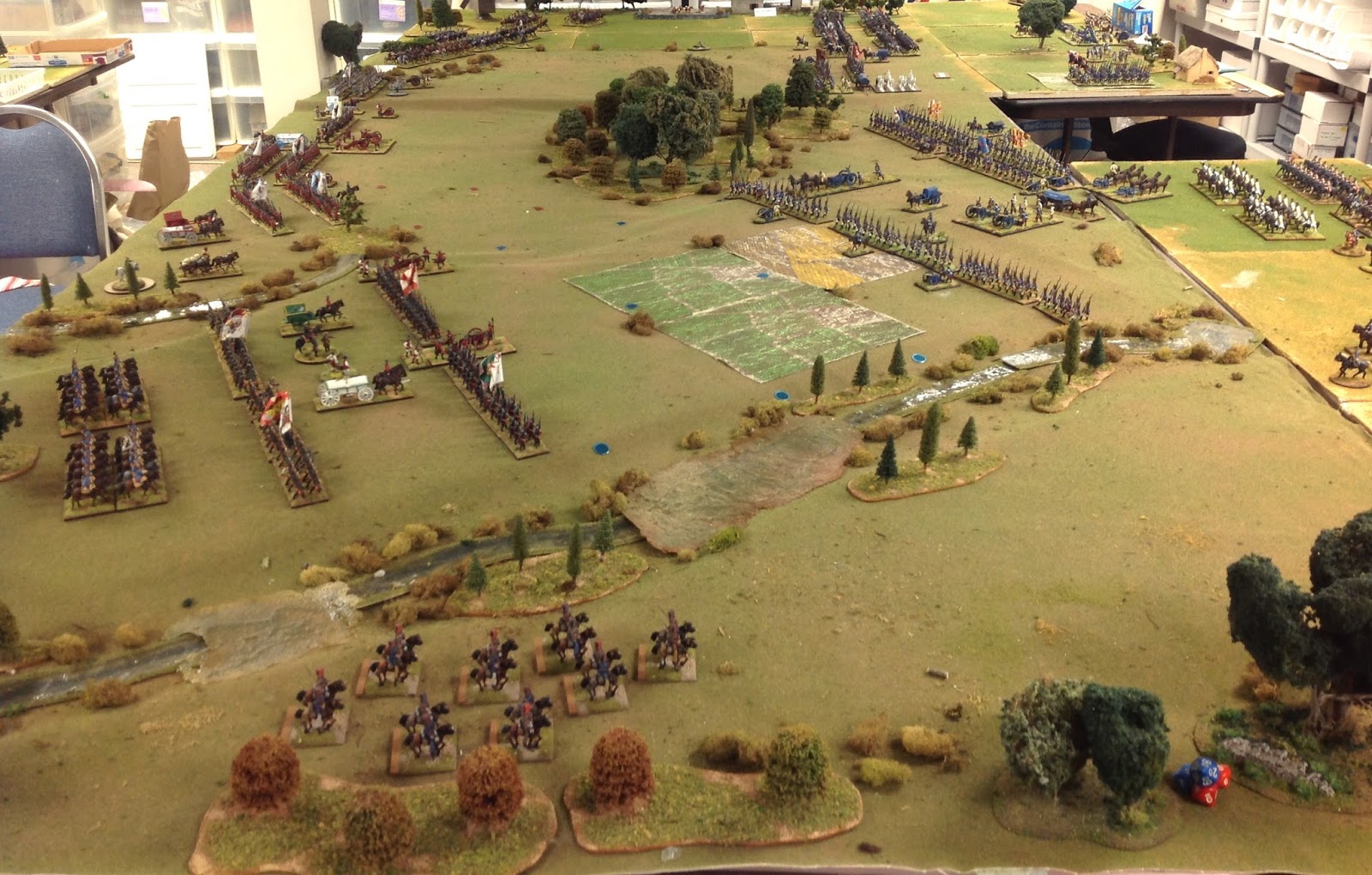
The battlefield of Zorndorf in miniature. Click to enlarge.


My Zorndorf Project began in earnest in October 2017 when I decided to go all-in on painting the SYW era Russian army. I set the date of the Seven Years War Association convention in April 2018 as a goal in order to keep me focused on the project. The prospect of being hanged in a fortnight does wonders for concentrating one's mind, I suppose.

In any event, here is what I have painted since October 18, 2017:

84 Cavalry
160 musketeers
9 limber horses
4 limber horse riders
2 division general command stands
2 Shuvulov Howitzers

I also based three sets of munitions/baggage wagons (a set includes one 4-wheel and one 2-wheel wagon and horse team), four artillery stands and one Prussian ammo wagon. Let's not forget about the Prussians.

The Russian Cavalry

Here are some pictures of all of the Russian cavalry that I have painted since October 2017. I still need to add 12 more cuirassiers and to bring the two hussar regiments up from 12 figures to 24 figures. Click on all pictures to enlarge the view. In some cases, a double click on the picture will make it even larger. Yipes!

Hussar Brigade: 12 man squadrons of Horvath (left) and Grudzinski (right) regiments.

Two 12-figure squadrons of Kargopol Horse Grenadiers. The first dozen horse grenadiers
had been painted prior to  October 2017.

Two 12-figure pulks of Cossacks.

One squadron of 12 of the 3rd Cuirassier Regiment.

Twelve of the 24 Russian dragoons that I have painted. They can be any dragoon regiment since the dragoons did not have any regimental distinctions, other than their flags.

The Russian Infantry

Since October I have painted four musketeer battalions in red waistcoats and one Observation Corps battalion wearing their regulation green coats. I previously had 4 battalions (3 musketeers and 1 grenadier battalion) already painted. The older battalions have 30 figures and the five new battalions have 32 figures that are more tightly spaced together on their stands.

The Perm and Moscow regiments based in the new 32-figure formation.

A close up view of the Narva regiment of musketeers. All of my flags are from GMB Designs.


The 5th Observation Corps musketeer regiment. I used the Minden Russian artillery crew figures
 that looked like they were standing around at ease and added some muskets from my Bits Box. The flags were copied from the Kronoskaf web site.


This gives me 9 Russian infantry battalions. I will need 12 or 13 for my convention game in April 2018. I am painting at a clip of one battalion per week so I should have no problems reaching my infantry goal in time for the game.

Russian Logistical Support Troops (wagons)

Ed Phillips painted some Russian 2-wheel and 4-wheel munitions wagons for me and I added a Perry Cossack wagon which really identifies the baggage train as "Russian".

Perry Cossack Wagon (from their Napoleonic figure range).

Some of Ed Phillips scrathch built Russian munitions wagons. Each of my infantry brigades will have both a 2-wheel and 4-wheel munitions wagon in its own unique color scheme. The above picture does not show the horse teams that I added to each wagon.


ff
The full set of munitions wagons showing the horse teams and riders.


The Green Set of wagons. 2-wheelers get one horse and rider.
4-wheelers get two horses and one rider.


The Red set of wagons.

The Light Blue set of wagons.


Russian General Staff

I painted the Fermor personality figure from the Minden Miniatures figure range. I also added command stands for division commanders Galitzen, Saltykov for the infantry and Demiku for the cavalry brigade.


Russian generals. Click picture to enlarge the view and to read the
captions that  identify the individual generals.

Russian Artillery
I am only going to use three or four cannon models in my Zorndorf game. The Prussian artillery component outnumbered that of the Russians, so the Prussians will have one more field gun model than the Russians. There will also be some small regimental guns that simply add one more D10 die to the musket fire of the battalion to which it is attached.

I still have to paint some limber team stands for each artillery piece. This will consist of four horses and one horse rider.


My Russian artillery contingent of two 12-pounders and two howitzers (both Shuvulov Secret Howitzers).


Summary

Well that brings the Zorndorf Project up to date. I have accomplished a lot of painting since October 2017 and I am far enough along that I can see the end of the painting obligations in sight. Once all of the painting is completed, then I will work on some terrain pieces that I will lay on top of my game mats.

Tuesday, January 30, 2018

Russian Observation Corps 5th Musketeer Regiment


I finished another battalion of SYW Russian infantry for my Zorndorf Project, this time a musketeer battalion in the Observation Corps.  I used some of the Minden Russian artillery crew figures and gave them some muskets so that they look like a battalion of soldiers that are standing "at ease" waiting for orders or resting until the battle comes to them. The flags were copied from the Kronoskaf web site.

I recruited the standard bearers and drummers from the Fife & Drum AWI Hessian musketeer  range of figures. The two NCOs (pointing) and the officer holding his sword over his head (why oh why do they do this?) are Minden Prussian jagers. Finally, the officer standing next to the colour bearer is one of the Austrian officers from the dismounted staff set of figures.

The 5th Musketeer Regiment in the Russian Observation Corps.
CLICK the picture to enlarge.
I had to kind of "fudge" things a little bit since none of the figures' uniforms are exactly correct. For example, most of them are not wearing the cavalry boots that the soldiers wore. If anyone wants to call me out on this and complain, then my story is that they were recently issued shoes and gaitors and got rid of the cumbersome cavalry boots. Also, the regiment probably left their green coats back at the baggage park and fought in their red sleeved waistcoats since Zorndorf was fought in August. However, the artillery crew figures are wearing the belly box cartridge box which makes them good candidates to be used as Observation Corps figures.

The officers all have boots so I did not have to make any changes to them. I added some green epoxy putty to the gaitors on the standard bearers to turn them into cavalry boots.

I am happy with the way that this unit turned out. When I first saw the artillery crew figures, my first thought was "these guys look similar to the Observation Corps soldiers". Fortunately, I had some spare muskets that I could put in their hands to make them infantry. I think that I might add these figures, muskets in hand, to the Minden range so that they can be used as Russian artillery fusiliers, which were attached to the artillery companies to provide some protection for the crewmen in case the enemy got too close.


Regimental History
Click on the link below to read about the history of the regiment, courtesy of the Kronoskaf web site.


In 1756, the Observation Corps was still recruiting and organising in Moscow and did not take part in the campaign.
In the Autumn of 1757, the regiment (only 3 battalions instead of the 4 battalions originally planned), initially stationed in Moscow, was sent to Novgorod.
In January 1758, the Observation Corps was finally ready and marched to the theatre of operation. Then the 3 battalions of the regiment took part in the Russian invasion of East Prussia. In July, the Observation Corps could align only 12,000 men. On August 6, during the invasion of Brandenburg, it marched from Paradise Kloster through Birnbaum to Schwerin on the Wartha river where it encamped. On August 10, Czernichef was instructed to march from Schwerin to Landsberg with the Observation Corps. On August 23, the Observation Corps marched from Landsberg to make a junction with Fermor's main army at Zorndorf. The junction was made at 2:00 PM on August 24 and the Observation Corps was deployed en potence on the flank facing Quartschen. On August 25, the regiment took part in the battle of Zorndorf where it was deployed in Thiessen's Brigade in the first line of the Observation Corps. About mid November, the regiment took its winter quarters in an area extending from Thorn (present-day Torun) to Culm (present-day Chelmno) as part of Braun's corps. 
On July 23 1759, the regiment took part in the battle of Paltzig where it was attached to Golitsyn Observation Corps. It was deployed in the first line of the left wing. A few weeks later, on August 12, the regiment fought in the bloody battle of Kunersdorf where it was deployed in the first line of the left wing as part of Essen's Brigade. During this battle the Observation Corps suffered so heavily that it was no longer able to operate as an autonomous corps.
At the beginning of 1760, the entire Observation Corps was disbanded and its troops integrated into the Fusilier Regiments of the Artillery.

By the way, if you are not already familiar with Kronoskaf,  then by all means click on the link and look at the vast array of information that they have collected about the Seven Years War. 

A close-up view of the battalion.

The command stand uses two AWI Hessian standard bearers and a Prussian jager officer holding his sword over his head. At the far left, a Hessian drummer and a Prussian jager NCO have been recruited into the regiment.

I could only get three of the four stands into this close up picture. It gives a better view of the "at ease" look of the battalion that is created by using some of the Russian artillery crew figures.

With the completion of this battalion, I now have 9 of the 12 battalions that I will need for my Russian army in my scaled down version of Zorndorf, which will be played at the upcoming Seven Years War Association convention (April 5-6, 2018 in South Bend, IN).