Wednesday, February 24, 2021

Richard Ansell


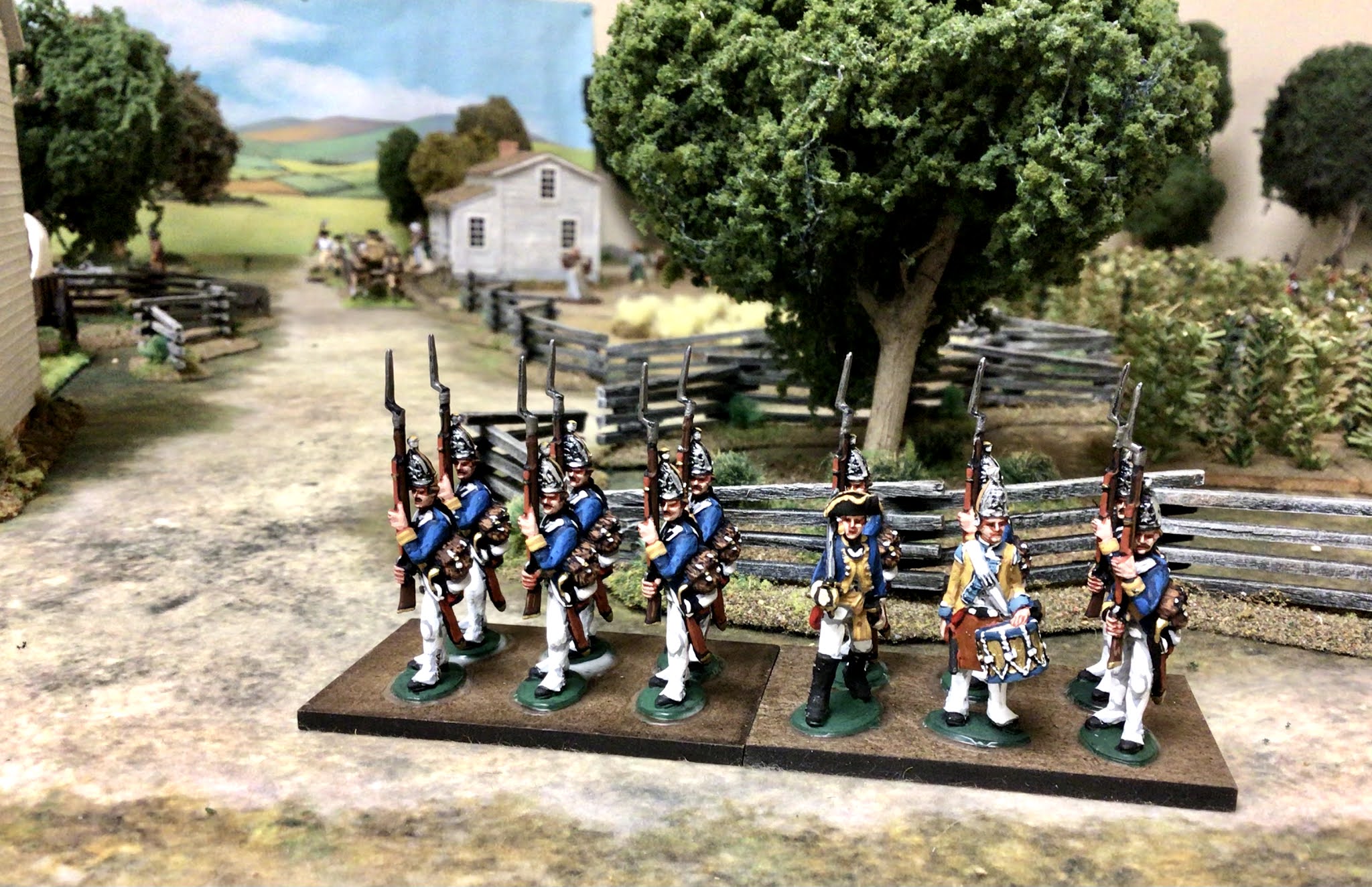
Minden Miniatures Seven Years War Hanoverian Musketeers

It is with deep regret and sorrow to hear that Richard Ansell passed away on February 11, 2021 due to complications with an old injury. On the way to having exploratory surgery to repair old wounds from his reenacting days, he suffered a heart attack from which he did not recover.

Those of you who are regular readers of my blog will know that Richard sculpted both the Fife and Drum Miniatures AWI and Minden Miniatures SYW figure ranges. Richard's talents also extended to such fine figure ranges as The Assault Group, Alban Miniatures, Crann Tara, Rif-Raf Miniatures, Hasselfree Miniatures and many others.

While Richard could sculpt in almost any style, his trademark style was a more anatomically correct and proportioned style, sculpted in the 1/56 scale (approximately 30mm high). Because his figures were done in a "scale" rather than a "size/height", they looked like real people rendered in miniature. At a time when the trend in figures was for "heroically proportioned" warriors with over sized heads, big hands and impossibly large weapons, Richard's anatomically correct style stood out from the rest of the crowd.

It was Richard's figure style that really caught my eye back in 2009 to 2010 when I stumbled upon the Minden Miniatures range, created by Frank Hammond and sculpted by Richard Ansell. The second I saw my first Minden figure, I knew that this was what I wanted to collect and paint. I bought lots and lots of Mindens from Frank, liking them so much that I bought the company when Frank offered it to me for sale.

Concurrently, I had started my own AWI figure range called Fife and Drum Miniatures in 2010. Richard was the sculptor for the range and I couldn't have made a better choice in sculptors. In addition to his exceptional sculpting talents, Richard was the nicest man that you could ever hope to know and he was a pleasure to work with. As noted above, he sculpted on commission for many other companies, so I had to wait in the revolving queue for my turn to have him sculpt figures. He worked at a pace of 8 figures per month, with 16 figures being the normal amount of figures that one could put into a standard master mould. So each commission was for 16 figures.

Every few months I would get an email from Richard saying "well Jim, what shall we do this month?" We would go over a few ideas with me giving Richard some broard perameters and ideas. Then I would sit back and wait, like a kid on Christmas Day, to see what wonderful goodies would appear two months hence. In some instances I would just give Richard some general ideas and tell him to just "go for it and stretch the bounderies of your  imagination". And the results always exceeded my expectations, particularly when it came to the personality figures, where he could really let his talent run free with creativity.


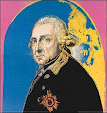
A great example of Richard's creativity in one of those "just go for it" moments, was when he made this sculpt of the Prussian hussar general von Zieten. This was sculpted as a special commission for one of our Minden Miniatures customers. The customer sent me a picture from a historical print and Richard rendered it  in green epoxy putty to perfection.

The inspiration for the von Zieten sculpt.

Von Zieten personality figure - a special commission for one of my Minden Miniatures customers.


It is very sad to see such great talent leave us, but even more so to lose a friend. I extend my condolences and best wishes to Richard's wife Coral. Richard, we are all better for having brushed up against you. Take care old friend.


Thursday, February 18, 2021

Painting Prussian Artillery Crews


Prussian artillery battery deploys in front of a popular drinking establishment.


This week's fox is the painting of several sets of SYW Prussian artillery crew and matrosses to fill in some holes in my Prussian artillery park. I often use the Minden Pioneers figures as either the fellows who push and pull the cannons into place or as actual artillery crewmen who have taken off their uniform coat to man the cannon in their waistcoats.

The Prussian artillery deploys in the village square as the locals look on in wonderment.


Take a look and judge for yourselves:


This week's painting production consists of all the crew shown above. The cannons were painted previously.


My new Prussian artillery battery (L to R): 12-pounder, 10-pound howitzer, and 3-pound battalion gun.


Another view of the same artillery battery, but with the addition of a munitions wagon in the background  and some civilians carrying crates of ammo to the cannons.

Both the artillery crew figures and the Pioneer figures come with open hands and an assortment of tools that allow one to customize each figure. In addition, I sometimes give some of the figures a drag rope to hold in their hands - the drag ropes would be attached to the cannon so that the men could pull the piece back in to its firing position.  I make the drag ropes from bits of florists wire that I twist together to make it look like they are holding cabled rope. Other figures get a piece of wire to hold, which represents a wood lever to use to pry the gun trail off of the ground, or to use as one of the poles that slide through a pair of rings on the gun trail, which are then used to left the trail to move it by hand.

Some of the Pioneers in waistcoats are holding artillery tools such as linstocks, rammers, water buckets and worms, etc. This makes them look like crew men who have removed their blue uniform coats so that they can get to work wearing waistcoats.

Each gun model is mounted, unattached, on an MDF base (60mm by 100mm). I glue four crew to all of my medium and heavy guns, but only three crew for light guns. I also place a smaller stand (60mm by 30mm) with two matrosses that is placed behind the gun model stand. This is done mostly for "looks" to indicate some of the depth of "stuff" that is found behind an artillery piece. I would typically include a limber and team of four horses behind each medium (5-8 pounds) and heavy ( > 9 pounds) cannon model. Light cannon (1 to 4 pounds) generally do not get a limber team because I usually attach the light guns to the infantry battalions and so the guns move with the stands of the infantry.

The 3-pound battalion gun is detached from the rest of the battery and
placed by itself on the righthand side of the picture. The Winterfeldt Regiment (IR1) is
 marching down the road to provide support to the artillery.

All of the pictures are set up on a game mat from Cigar Box Battle Mats, which have become one of my favorite mats to use on my game table.  Link to the web site: Cigar Box Battle Mats. This particular mat is the New Europe Plus (6ft by 4ft) and I use it with the New Europe Two mat that creates a table surface of approximately 10ft long by 6ft wide. The width of the mats are closer to 5ft rather than the 4ft Plus advertised. 

All of the buildings shown in my pictures were made by Herb Gundt, who also made the corn fields and trees that you can see in the background.

Nearly all of the miniatures are from the Fife and Drum and Minden Miniatures ranges of figures. There are also several civilians from Perry and Blue Moon.


Next UP:


Prussian Winterfeldt regiment IR1


Tuesday, February 16, 2021

Bella the Destroyer 1, Austrians Nil


An Esterhazy Hussar in Austrian service didn't stand much of 
a chance against a 30-pound Golden Retriever puppy.


Our six month old Golden Retriever puppy, Bella the Destroyer, has taken a shine to my collection of wargaming miniatures. The match was played on a fast pitch, which favored the fleet visiting team over the slower, aged home side. The match was scoreless over the first ten minutes, but soon the four legs of the faster hound employed her superior speed as she breezed by the defender and scored the goal. It was a very inept showing by the home team.

Here is a picture of her recent encounter with one of the Austrian Esterhazy Hussars. It did not turn out well for the Hussar:


A lovely looking Minden Miniatures Austrian Hussar after its encounter with Bella the Destroyer.

At least I can say that Bella the Destroyer is a pro-Prussian puppy, given her predilection for destroying Austrian soldiers. That is good news in Potsdam, but bad news in Vienna. There are enough surviving pieces  that might enable me to put the poor Hussar back together. I think that I would leave the damaged bits in their unpainted, chipped paint state and put the figure on display as a warning to any other wayward figures.

Yesterday, I was sitting at my painting table and I noticed that Bella the Destroyer was nosing around near a box of AWI skirmish game figures. After the Hussar Incident (it is now officially an incident) I could only deduce that she was up to no good. Sure enough, by the time I raced the 10 feet from my seat to where Bella stood, she was in the process of picking up a Continental soldier. Fortunately, I was able to wrest the soldier from Bella's maw (I like that word: maw) and return it to its box unharmed. The Continental fared much better than the Hussar.

I am now put on notice that my wargame figures are "fair game", so to speak, and that any future attacks on Vienna or other realms will be entirely my fault unless I keep the Little Men out of reach of the menacing hound.

Friday, February 12, 2021

Von Riedesel Grenadiers of Brunswick


General von Riedesel and the grenadier company of his regiment ask the local citizenry for directions.


Just for the fun of it I decided to do a minor conversion of some Fife and Drum Miniatures Hessian Grenadiers and turn them into Brunswick grenadiers for my Saratoga Campaign armies.

The conversion involves nothing more than filing down the top of the figure’s gaiters which turns the leg into a pair of one-piece overalls. I then painted the twelve figures as the von Riedesel grenadier company which was part of von Breyman’s converged grenadier battalion at Saratoga. The battalion was comprised of the four grenadier companies of the parent Brunswick musketeer regiments that were a part of Burgoyne’s army.


Here are a few more pictures of the unit:


Sunday, February 7, 2021

Farewell Old Nosey, Rest In Peace


Christopher Plummer as the Duke of Wellington in the movie "Waterloo"

The actor Christopher Plummer passed away on February 5, 2021. While most obituaries cite his role in The Sound of Music, and rightly so, his role as the Duke of Wellington in the film "Waterloo" is how I best remember him. The actor who played Wellington/Wellesley in the Sharpe series may have been more spot on, but Christopher Plummer will always be how I remember him.

Here is a synopsis of Plummer's acting career, from the Rotten Tomatoes site:

Christopher Plummer, who rose to international fame as Captain Von Trapp in The Sound of Music, began his screen career with an “and introducing” credit on Sidney Lumet’s 1958 Stage Struck. By 1965 he would be known everywhere as papa Trapp, but Sound of Music was lighter fare for Plummer, a movie that punctuated a career building around military epics and classic-style adventures like The Fall of the Roman EmpireBattle of BritainWaterloo, and The Man Who Would Be King.

The Silent PartnerMurder by DecreeStar Trek IV: The Undiscovered Country, and 12 Monkeys were among his movie highlights until a career resurgence with 1999’s The Insider, the Michael Mann big-tobacco expose with Al Pacino and Russell Crowe. This opened to a string of critical and commerical hits, including Best Picture-winner A Beautiful MindInside Man, and Up.

At 80, he recieved his first Oscar nomination for The Last Station. He won the Best Supporting Actor Oscar for Beginners, as a man finding a new lease on life in his later years, at age 82, becoming the oldest to ever win an acting Oscar. He also became the oldest to be nominated for an acting Oscar at age 88 for his last-minute casting to Ridley Scott’s All the Money in the World.

Among Plummer’s final roles were as Ebenezer Scrooge in The Man Who Invented Christmas, and as Harlan Thrombey in Rian Johnson’s whodunit Knives Out


Here are some of Plummer's lines from the film Waterloo. I am sure that everyone remembers them well.

(My favorite Plummer/Wellington line: "I like a man who can defend a hopeless position. Promote him to corporal!")


mmm

Wednesday, January 27, 2021

The Saratoga Project: Brunswick Troops


Fife and Drum Miniature Hessian Musketeers wore uniforms
that were similar to those of the Brunswick soldiers.

Part II of the Guide to the Saratoga Project describes the organization and uniforms of the German troops that were in Burgoyne's Canada Army.

Burgoyne's army consisted of about 4,400 British troops and 4,700 German troops at the start of his campaign. The German contingent was comprised largely of hired soldiers from the Duchy of Brunswick in Germany. There was also a smaller German contigent from Hesse Hanau. The Duke of Brunswick's son, Carl Wilhelm Ferdinand, was married to George III of Britain's older sister. This facilitated the rental of Brunswick regiments to the British cause in North America.

The Hesse Hanau musketeer regiment, including its grenadier company, was stationed at Fort Ticonderoga,  and did not participate in the fighting at Saratoga. The von Barner light battalion was composed of musket armed chosen men from the Brunswick musketeer regiments plus one company of rifle armed jagers.

The table below provides information about the uniforms of the Brunswick musketeer regiments. All regiments had blue coats and white small clothes (waist coat and breeches) and white hat lace. The term "Facing Color" refers to the colors of the lapels, collar and cuffs. Hat Lace is simply the color of the tape around the edges of the cocked hat. The pompom was a decorative ball of yarn atop the cocked hat.

Brunswick Musketeer Regiments

Regiments          Coat Color     Facing Color   Buttons   Pompoms/center 

Prinz Friedrich    Blue                Yellow            White      Yellow/White                

von Riedesel        Blue                Yellow            White      Yellow/White                

von Specht           Blue                Red                Yellow       Red              

von Rhetz             Blue                White            Yellow       White/Yellow   


Other Regiments           

von Barner            Blue                Black**        White              White            

Jaegers                 Green              Red                White              Green ***      

Hesse Hanau        Blue                Red *              White            White                     

Footnotes

*    the Hesse Hanau regiment had red lapels with white button lace

**  the light infantry battalion had no lapels; yellow aigulette on the right shoulder

*** the Jagers had green waist coats and buff colored breeches, white aigulette on right shoulder


Regimental Drummers

All musicians wore a yellow coat with shoulder epaulettes in white. There were no chevrons on the sleeves save that of the senior drummer in the regiment. The facing colors varied from regiment to regiment, as follows:

Light Blue - Prinz Friedrich and von Riedesel

Red - von Specht

White - von Hetz

Coat Details

Uniform coats were dark blue with red turn backs. The cuffs were of the looser Swedish Cuff style rather than the tight Prussian cuff. The lapels had only four buttons: one on the top, then a pair of buttons in the middle of the lapel, and one button on the bottom of the lapel.

Small Clothes

All regiments wore white waistcoats and white breeches. The Brunswickers adapted the British style of "overalls". The overall was a single leg with gaitor buttons at the ankles near the bottom of the cloth, thereby negating the need for the soldiers to wear separate leg gaitors. There is some conjecture that the Brunswick soldiers wore stripped overalls made from mattress ticking. This is incorrect as the overalls were made from the linen colored spare tents provided by the British. The striped overall look originates from the John Mollo book on uniforms of the American Revolution and the error has perpetuated itself into many a uniform plate. The only Brunswick soldiers that wore striped ticking overalls were the Prinz Ludwig dismounted dragoon regiment.

Officers

Brunswick officers were armed with sword and carried spontoons. There is some speculation that the pole arms for officers and NCOs were left in storage in Canada and that they carried firearms. Officers were distinguished by a waist sash of a silver and yellow mix as well as with a gorget around their necks. Their hats hat silver lace and a black cockade on the front.

Brunswick NCOs were distinguished by an ash cane that hung from the second button from the top on the righthand lapel. They had metalic lace on the collar, lapels and cuffs. Their cocked hats had black and white pompoms and hat tightener cords. Those NCOs carrying firearms wore a belly box for cartridges on their front waist.

Grenadiers

Brunswick grenadiers wore the same uniform as the musketeers in the regiment, save for the ubiquitous miter hat. The grenadier company from each of the four Brunswick regiments were converged into one grenadier battalion.

Hessian Grenadiers from Fife & Drum Miniatures- uniforms were similar 
to those of Brunswick grenadiers.

Grenadier Miters

                            Miter Plate        Miter Bag                             Pompom

Prinz Friedrich     Silver            Yellow w/white piping          Yellow/white

von Riedesel         Silver            Yellow w/white piping           Yellow/white

von Specht            Brass             Red w/white piping               White

von Rhetz              Brass             White w/ red piping               Red

Hesse Hanau        Silver            Yellow w/white piping            Red /yellow


Hessian Grenadiers from Fife and Drum Miniatures. Their uniforms
are similar to those of Brunswick grenadiers.

Fife and Drum Miniatures is currently working on Brunswick musketeers and grenadiers to be added to the product range. Their expected arrival is approximately late April 2021. In the meantime, I use the F&D Hessian figures as stand ins for Brunswickers. The principal difference between Brunswickers and Hessians is that the former wear one-piece overalls and the latter wear gaitors.


Thursday, January 21, 2021

The Saratoga Project: Guide To Burgoyne's Army


British 9th Foot at Saratoga
(Fife and Drum Miniatures)

My lack of blogging in recent weeks does not indicate a lack of hobby related work during the first few weeks of 2021. Quite the contrary, my paint brushes have reactivated favorably and I have made a good dent in my planned project for 2021: The Saratoga Project in 1/56 Scale. The 1/56 scale figures are approximately 30-32mm in height and of course they will all be Fife and Drum Miniatures figures.

As of today, my British Saratoga army includes: 9th/20th/21st/62nd Regiments of Foot; two stands of 8 light company figures; three stands of 8 grenadiers. The line regiments will have five stands of 8 figures, or 40 in total. The converged light and grenadier battalions will each have six stands of 8 figures, or 48 in total.

My first inspection of the armies at Saratoga indicates that I can do the British army with a moderate number (for me, at least) of figures at my planned figure to man ratio of 10 to 1. This ratio means that one casting represents 10 actual soldiers. I like to organize my war game armies around historical orders of battle, if they are available. For this purpose, I used the Osprey Campaign Saratoga 1777 book, authored by Brendan Morrissey. As an example, if the British 9th Regiment of Foot had 398 officers and men during the campaign, then I would round up to 400 men and field a war gaming unit of 40 castings.

I will use my existing American regiments augmented by Morgan's Rifles.

The project will also include the necessary troops to fight Oriskany, Hubbardton and Bennington, so this includes Mohawk Indians and Brunswick troops. By the way, Brunswick musketeers and grenadiers are the next new figures in the queue of the Fife and Drum Miniatures Saratoga figure range. These will likely be available by May 2021.

Converged British Light Infantry

Converged British Light Infantry

Converged British Grenadier Battalion


Reference Material

A good place to start is the finding of a good reference books with the orders of battle for all of the armies. Fortunately, Osprey Publishing has "Saratoga 1777, Turning Point of a Revolution". The book, authored by noted war gamer and historian Brendan Morrissey, provides a nice summary of the whole campaign and specific battles, and also provides detailed orders of battle around which a war gamer can build his/her own table top army.

If you are interested in a deeper dive into the Saratoga campaign, then I would recommend the following books:

  • Campaign to Saratoga - 1777,  by Eric Schnitzer and illustrated by Don Troiani, (2019 Stackpole Books - publisher)
  • Saratoga, A Military History of the Decisive Campaign of the American Revolution, by John Luzader, (2008 Savas Beatie - publisher)
  • Saratoga, The Turning Point of America's Revolutionary War, by Richard Ketchum, (1997 Harold Holt -publisher)
  • Uniforms of the British, German and American Armies at Saratoga, by Brendan Morrissey is a very detailed description of uniform details and regimental organization for the units that fought at Saratoga. The information can be found on the Perry Miniatures web site (under the Articles pull down menu).  Click on the adjacent link  to find the three articles. Perry Miniatures "Articles"
  • Campaign Book #7, The War of Independence in the North, "We Have Always Governed Ourselves, by Greg Novak (1988 Ulster Imports - Publisher, out of print). 

Eric Schnitzer is the head Park Ranger, historian-interpreter at Saratoga National Historical Park, having served in that role for more than 20 years. Don Troiani is well-known for his accurate historical and military paintings. John Luzader has served with the National Park Service with an expertise on the battle of Saratoga.


62nd Foot


21st Foot


Burgoyne's British and German Army

Lt. General John Burgoyne's Canada Army numbered approximately 9,500 officers and men and consisted of troops from Britain, Brunswick and Canada. There were two brigades of British soldiers with 4,000 men; the Brunswick contingent with 3,500 men; and 1,900 headquarters and unassigned troops. The following order of battle for Burgoyne's army is sourced from Brendan Morrissey's book on the Saratoga Campaign (Osprey).

The numbers in parentheses indicate the total number of officers and men in that particular regiment or formation.

Advance Guard - Brigadier General Simon Fraser

24th Foot (391)

Converged British Grenadiers (631)

Converged Light Companies (611)

Corps of Marksmen (102) 

Royal Artillery - 

  • four 6-pounders - Captain Thomas Jones
  • four 6-pounders, four 3-pounders, two 5.5-inch howitzers - Captain Ellis Walker


1st Brigade - Brigadier General Henry Powell

9th Foot  (398)

47th Foot (detached to guard bateaux on Lake George) (380)  

53rd Foot (left behind at Fort Ticonderoga ) (391)

2nd Brigade - Brigadier General James Hamilton

20th Foot  (383)

21st Foot  (393)

62nd Foot  (377)

NOTE: due to detachments, the 9th Foot joined the 2nd Brigade commanded by Hamilton during the two battles of Saratoga.

Artillery 

  • RA - Major Griffith Williams (267)
  • Hesse-Hanau Artillery - Captain Georg Pausch (103)
  • Attached infantry - Lt. George Nutt (155)
  • Artillery Park - 3 brigades

Headquarters

General staff and ADCs (17)

Prinz Ludwig Dragoons (dismounted) - Lt. Col. von Baum (307)

King's Loyal Americans - Lt. Col. Ebenezer Jessup (150)

Queen's Loyal Rangers - Lt. Col. John Peters (150)

Canadians/Bateauxmen - Capt. Monin / Capt. Boucherville (300)

Indians (500)


The Brunswick Contingent - Major General Friedrich von Riedesel

The Brunswick contingent constituted the Left Wing of Burgoyne's Canada Army and was organized into three brigades: Advance Corps (von Breymann), 1st Brigade (von Specht), 2nd Brigade (von Gall) and the Hesse Hanau artillery (Pausch).

Artillery - Captain Georg Pausch

4 x 6-pounders Hesse Hanau artillery brigade

Advance Corps - Lt. Colonel Heinrich von Breymann

Grenadier Battalion - companies from the Rhetz, Riedesel, Specht and Prinz Friedrich regiments (456)

Light Battalion - Major Ferdinand von Barner - chosen men from the same regiments as above (398)

Jager Company - Captain Carl von Geisau (124)

Artillery - Lt. von Spangenburg (2 x 6pdrs and 2 x 3pdrs)

1st Brigade - Brigadier General Johann von Specht

Regiment von Rhetz (535)

Regiment von Riedesel (537)

Regiment von Specht (536)

2nd Brigade - Brigadier General Wilhelm von Gall

Regiment Prinz Friedrich (533) - detached to Fort Ticonderoga

Regiment Erbprinz of Hesse-Hanau  (546)


In war game terms, my Brunswick contingent will have the converged grenadier and light company battalions, the Jager company, two sections of artillery and four battalions of musketeers (omitting the detachement at Fort Ticonderoga). As of this writing, only the jagers are painted and I plan on using my Minden SYW Prussian artillery crew figures manning British 6-pounders and 3-pounders. I can draft some of the Fife and Drum Miniatures Hessians into my Brunswick contingent until the Brunswick figures go into production, probably in May 2021.


What Is Ahead?

I plan on adding uniform information for both British and Brunswick regiments, to be posted on this blog. I will also post orders of battle for the forces at Hubbardton, Bennington and Oriskeny in the near future. Finally, I will post pictures of the British and Brunswick regiments as they are painted. Hopefully, by mid to late Summer 2021, I will have the necessary forces to game all of the battles that comprise the Saratoga Campaign of 1777.